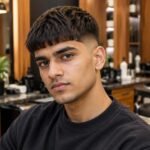
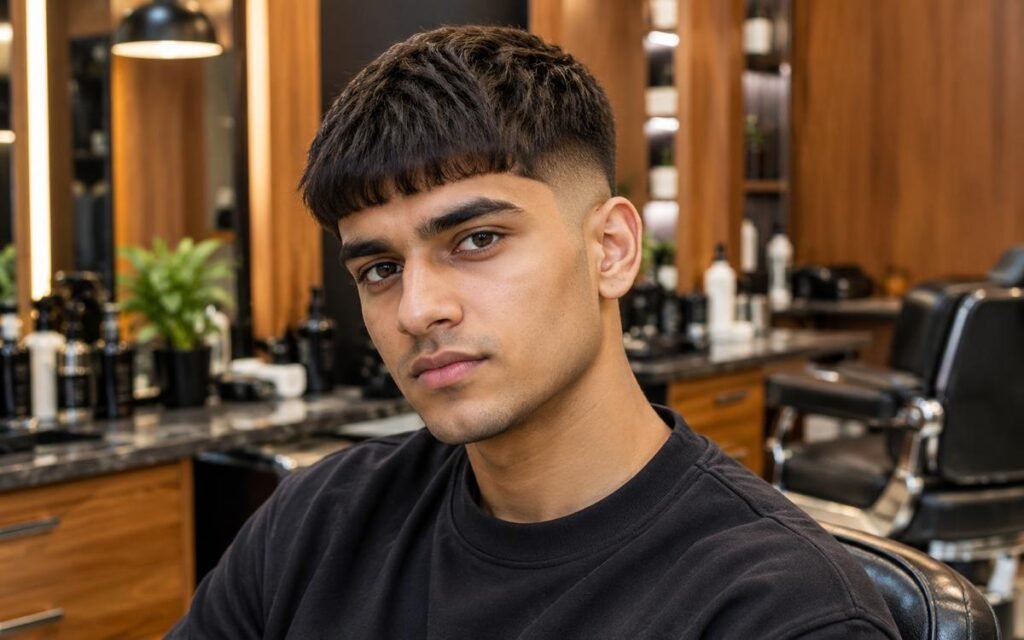
A French crop taper fade pairs a short, textured top with a forward fringe. The sides shorten gradually, so the cut looks sharp without much daily effort. This guide covers the main variations, fade heights, hair type and face shape advice, and what to tell your barber. You’ll also find styling steps, product tips, and upkeep.
What Is a French Crop Taper Fade?
A French crop taper fade is a men’s haircut with a short, textured top, a forward fringe, and tapered sides. The top usually sits around finger length or shorter. Hair is brushed toward the forehead and cut straight across or slightly choppy.
On the sides and back, the hair shortens in a gradual blend. It stays longer near the top and gets shorter around the ears, temples, and neckline. You won’t see a harsh line.
The cut combines two separate choices: the top and fringe, and the taper. Each one can change. That’s why the same haircut can look classic, messy, polished, or bold.
Why Is French Crop Taper Fade So Popular?
It looks neat without taking much time. A short textured top needs little styling, and the taper keeps the sides tidy between visits.
Several other things help. The fringe frames the face. The cut works with many hair types and sits well with glasses and facial hair. You can wear it clean and professional or loose and casual. It’s also easy to show a barber, since reference photos are everywhere.
French Crop vs Taper Fade
A French crop describes the top. A taper fade describes the sides and back. They aren’t competing haircuts, and most men get them together.
The French crop sets the shape of the top: short, textured, and pushed forward. The taper fade sets how the sides blend into it. You could pair a taper with a quiff, a buzz cut, or a crew cut. You could also pair a French crop with scissor-cut sides.
French Crop vs Textured Crop, Caesar Cut and Crew Cut
These four cuts share a short top, so their names often overlap in barbershops. The main differences are fringe shape and texture.
| Cut | Top and fringe | Texture | Styling effort |
|---|---|---|---|
| French crop | Short top, forward fringe, often blunt | Moderate | Low |
| Textured crop | Choppy top, softer fringe | High, with visible movement | Low to medium |
| Caesar cut | Even short top, horizontal fringe | Minimal | Very low |
| Crew cut | Short top brushed up, no forward fringe | Light | Very low |
A textured crop uses point cutting or razored ends to separate the pieces. The result looks looser than a French crop. A Caesar cut keeps the top one even length for a structured, uniform look. A crew cut tapers the back and sides and keeps the top slightly longer, usually brushed up and away from the forehead.
Barbers use these names differently, so bring a photo.
Low, Mid and High Taper Fade Explained
The three heights differ by where the shortest part of the blend sits. Higher means more contrast and more upkeep.
| Height | Where it starts | Contrast | Grow-out |
|---|---|---|---|
| Low | Near the ears and neckline | Subtle | Keeps shape longest |
| Mid | Around the temples | Moderate | Moderate |
| High | Above the temple corner | Strongest | Loses shape fastest |
Low Taper Fade
A low taper fade starts near the ears and neckline. Most of the side hair stays, so the look is soft and clean. It suits school, the office, and everyday wear. It also shows the least scalp, which makes it a safe first choice.
Mid Taper Fade
A mid taper fade begins around the temples. It looks sharper than a low taper but less bold than a high one. Many barbers treat it as the most versatile height. It pairs well with a textured top and needs regular trims.
High Taper Fade
A high taper fade starts above the temple corner. The sides get skin-tight, and the contrast with the top is the strongest of the three. It makes a statement and defines the shape clearly. It also needs the most frequent touch-ups.
Is a Low Taper the Same as a Low Fade?
Not quite. A low taper is a soft, localized blend at the temples and nape. It keeps more length and exposes less scalp. A low fade usually cuts shorter, often down to skin, with a more visible gradient that runs further up the side.
Barbers don’t always use the terms the same way. Show a photo and point to where the blend should start and stop.
What Fade Goes Best with a French Crop?
No single fade wins. A low taper is the safest pick for a first French crop. A mid taper adds definition, and a high fade gives the boldest contrast. A skin fade adds a crisp finish at any height.
Choose based on your face shape, hair type, and how often you’ll visit the barber. If you’re unsure, start low. Going higher is easy later.
The French-Crop Top and Fringe
The top of a French crop is short to medium and pushed forward. The fringe sits across the forehead, and its shape changes the whole look.
A blunt, straight-edged fringe gives a crisp, graphic line. A soft textured fringe has more movement and looks relaxed. Texture usually comes from point cutting. Without it, the fringe can turn into a flat, combed-down block.
Fringe line height matters too. A fringe that sits at a sensible height relative to your temples keeps the cut balanced. Details like a burst fade can change how the sides frame it.
What Makes the Taper “Low”?
The taper is “low” when its shortest part sits low on the head, around the temples, sideburns, and neckline. More length stays above that point.
Barbers build it with clippers, using guard lengths and the taper lever for a smooth transition. Blade position controls how short the edge gets. The exact guard sizes vary by barber and by the result you want, so treat any number as a starting point.
A taper generally keeps more hair than a fade. A very subtle version, sometimes called a shadow taper, leaves a skin-close finish only at the very edge.
15 Best French Crop Taper Fade Styles
These 15 styles differ in fade height, fringe shape, texture, or hair type. Each one has a reason to exist.
1. Classic French Crop Taper Fade
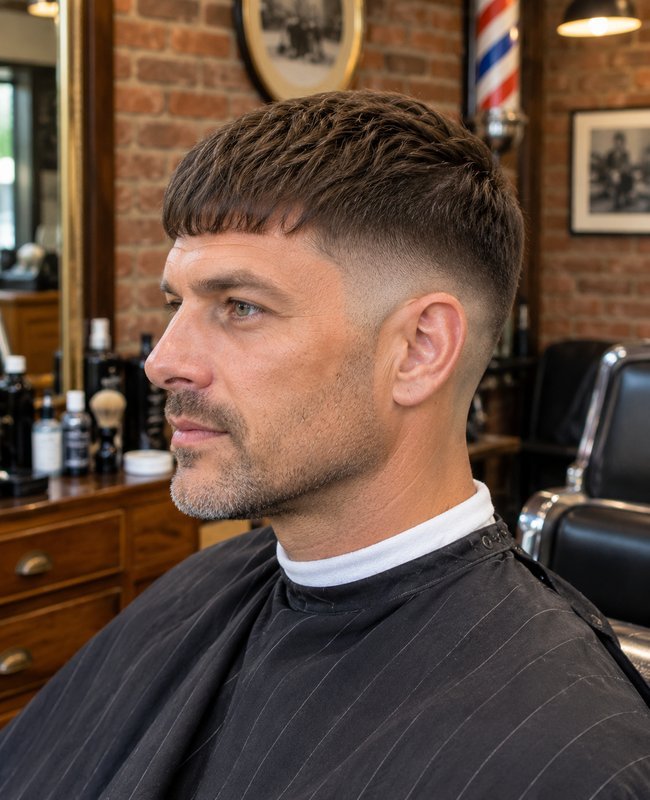
The baseline version. The top is short, usually around one to two inches. A neat, straight fringe sits across the forehead, and a smooth low or mid taper finishes the sides. It’s easy to style and a good first French crop.
2. Low Taper Fade French Crop
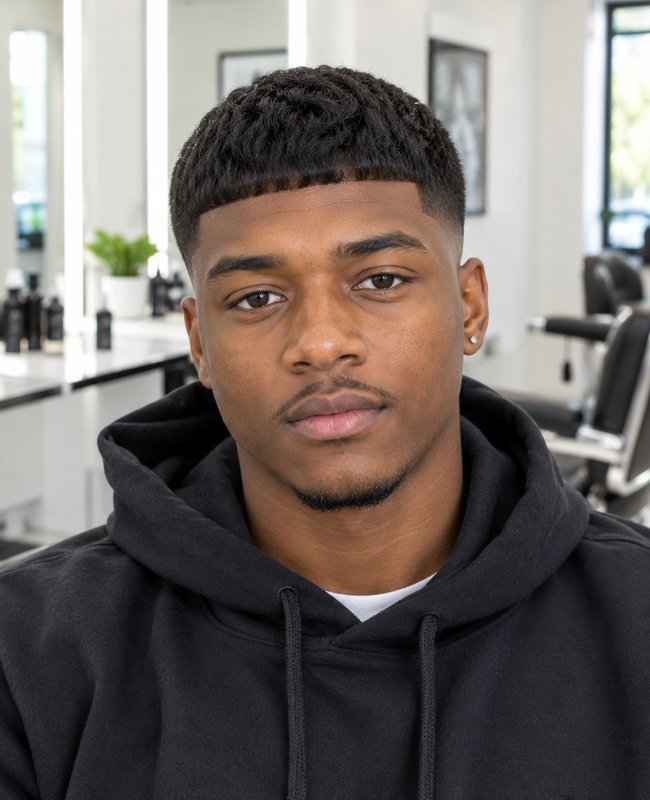
Here the taper touches only the temples and neckline. The sides keep most of their length. That makes it the cleanest option for daily wear at work or school, and the blend stays subtle.
3. Low Taper Fade Messy French Crop
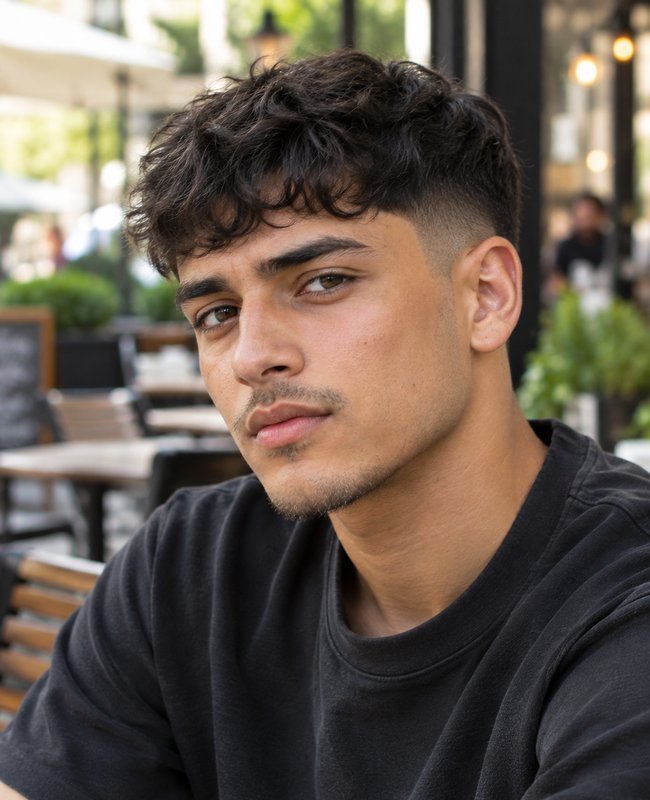
This version has a more relaxed top. The fringe falls unevenly, and the hair looks lived-in. Matte clay, paste, or texture powder creates the finish. It works well on wavy hair that already has natural movement.
4. French Crop with Textured Low Taper Fade

The barber point cuts the top to create choppy layers and remove bulk. The fringe stays clean. This helps thick hair, since a dense top can otherwise look flat or heavy.
5. Short French Crop Taper Fade
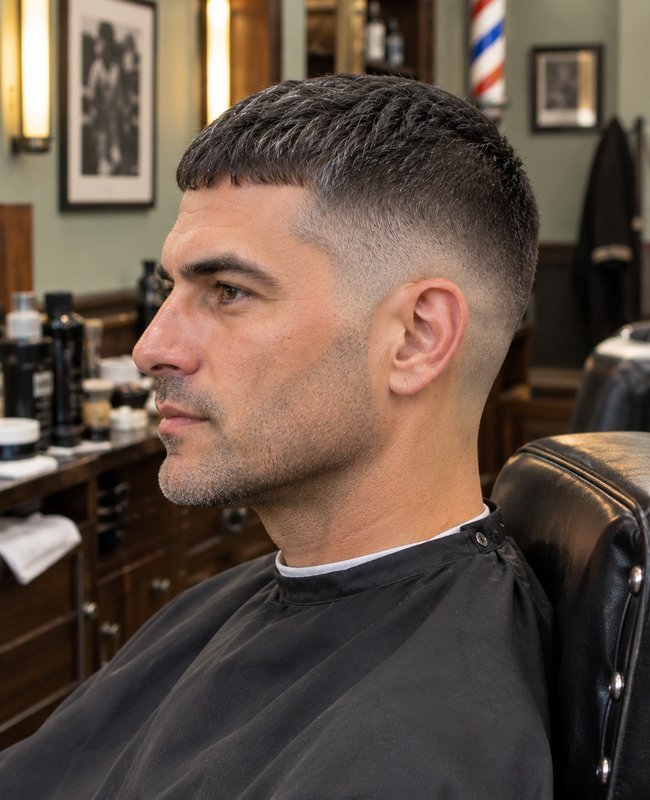
The top sits closer to the head and the fringe is shorter. It needs very little product. The trade-off is less room for error, because a short fringe can’t be restyled much.
6. French Crop Taper Fade for Straight Hair
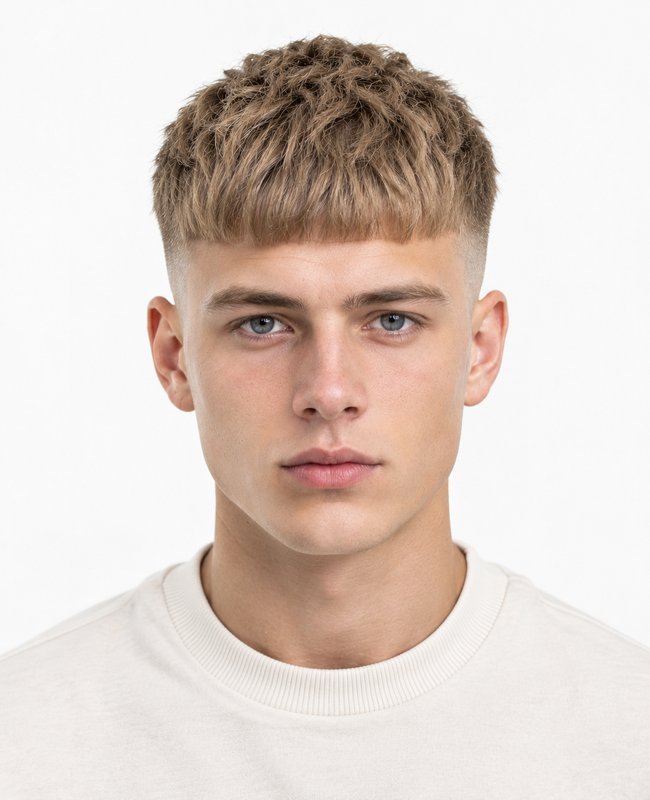
Straight hair holds a blunt fringe well. Smooth sides give a crisp, clean line. The top still needs texture to avoid looking flat. Texture powder or sea salt spray adds grip.
7. French Crop Taper Fade for Curly Hair
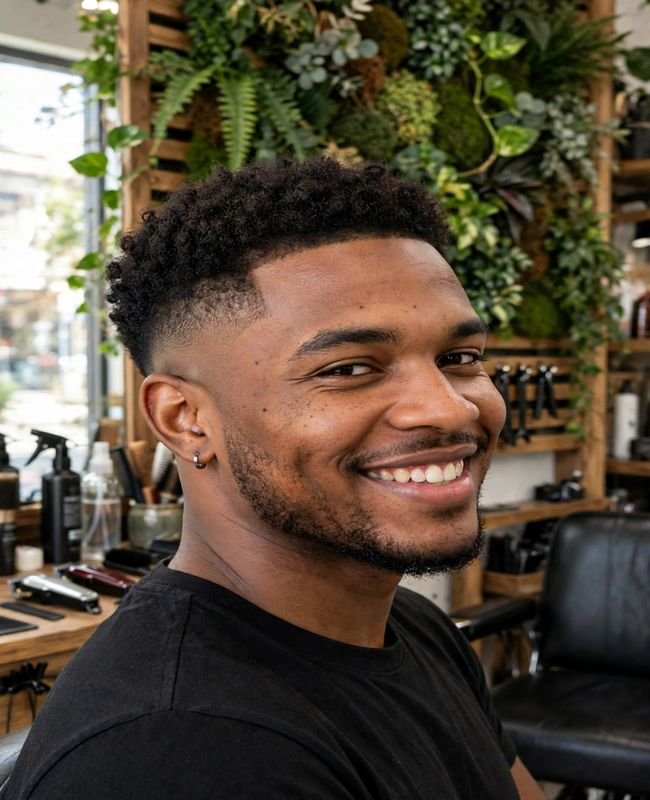
Natural curls sit on top, and the sides stay tidy. The top needs enough length to let curls form instead of shrinking into a tight cap. The fringe follows the curl pattern. Curl cream controls frizz.
8. French Crop Taper Fade with Beard
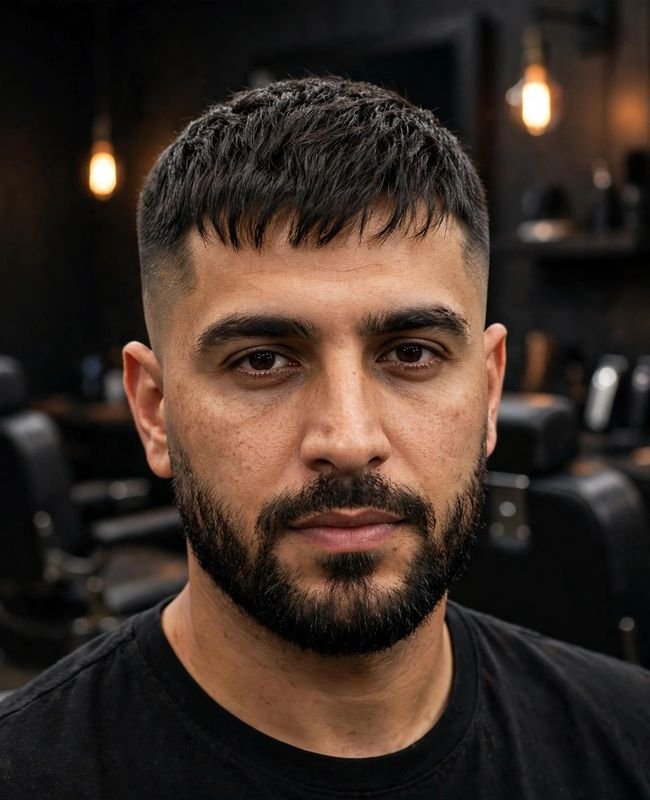
The sideburns blend into the beard. Without that connection, the cut can look disconnected. A short beard suits nearly any fade height. A longer beard looks best with a taper that leaves a bit more side length, so the proportions stay balanced.
9. Textured Crop Low Fade Inspired French Cut
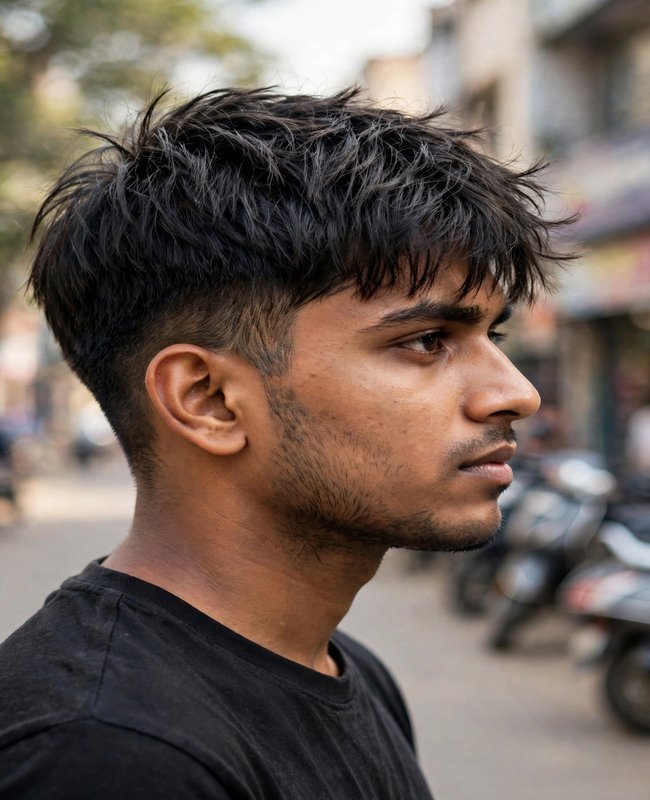
This hybrid borrows the textured crop’s movement. The fringe is less blunt. The top is layered and finished with a matte product. A clean low fade keeps the sides neat, so the whole cut feels easy-going.
10. French Crop Taper Skin Fade
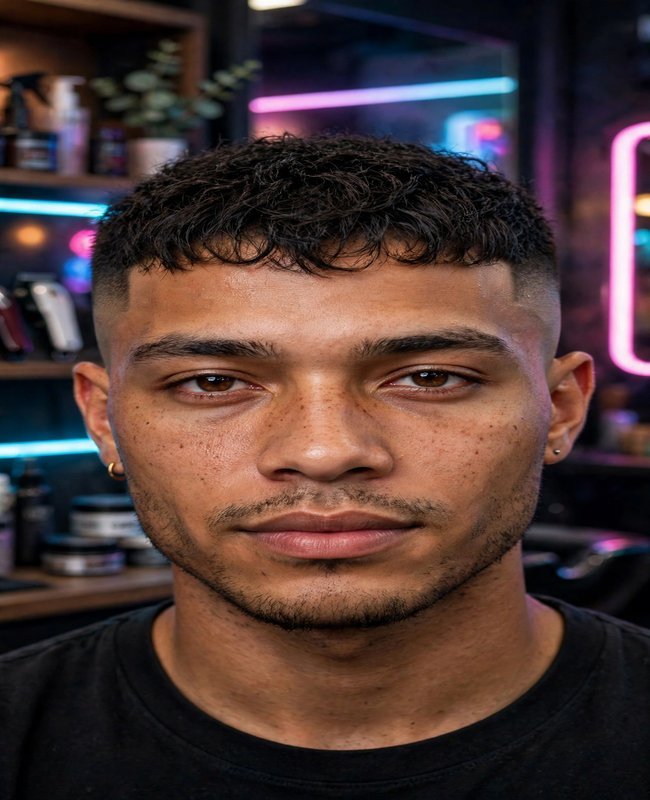
The sides go down to skin level. The contrast with the textured fringe is high, and the finish looks fresh from the chair. It also grows out noticeably fast, so regular upkeep matters.
11. French Crop Mid Taper Fade
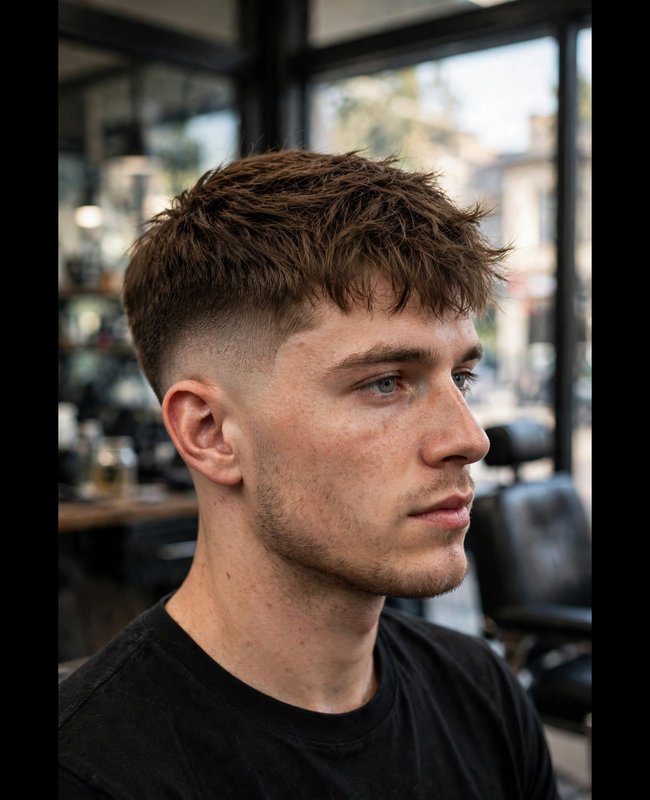
The blend starts near the temples. Contrast is moderate. It sits between a low taper and a high one, which makes it a good middle ground for men who want more definition without going extreme.
12. French Crop High Taper Fade
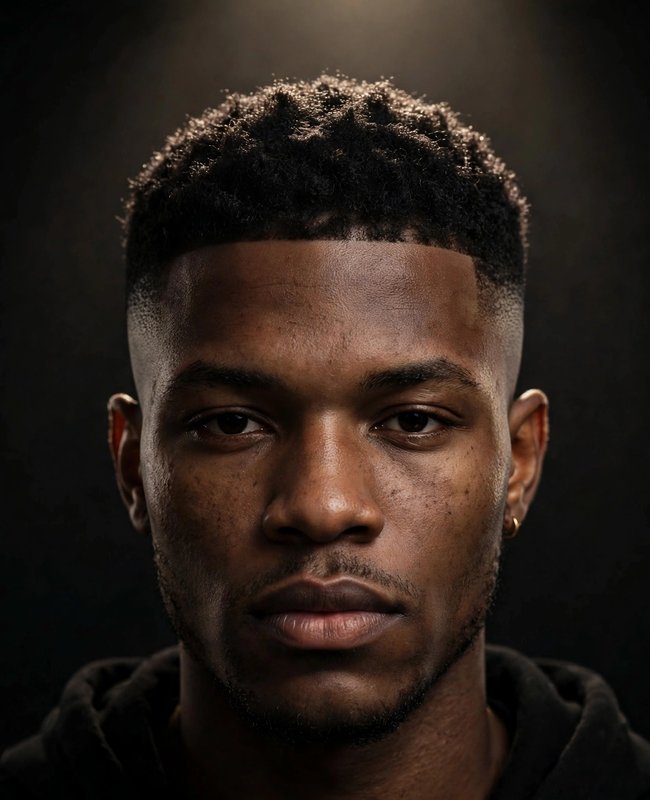
The sides are skin-tight from above the temple corner. The top stays textured with a sharp, blunt fringe. This version has the strongest contrast and the cleanest structure. It also needs the most frequent barber visits.
13. French Crop Burst Taper Fade
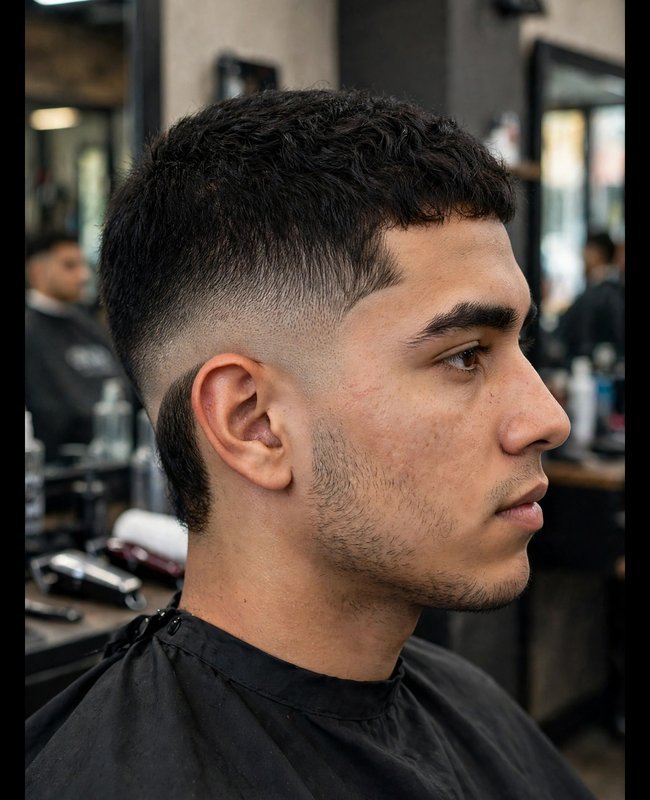
A burst fade curves around the ear in a semicircle and leaves more length at the nape. On a French crop, that curve adds extra detail without changing the top. The fade lines look sharp and slightly modern.
14. French Crop Drop Taper Fade
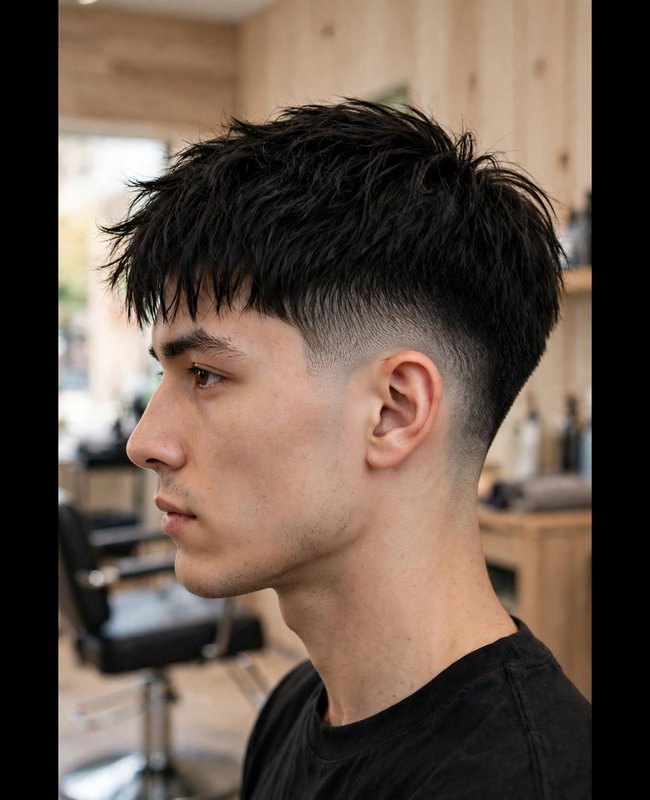
The fade line drops down behind the ear and follows the curve of the head. It sits lower at the back than at the front. Paired with a choppy forward top, it gives the cut a bit more edge.
15. French Crop Taper Fade for Wavy Hair
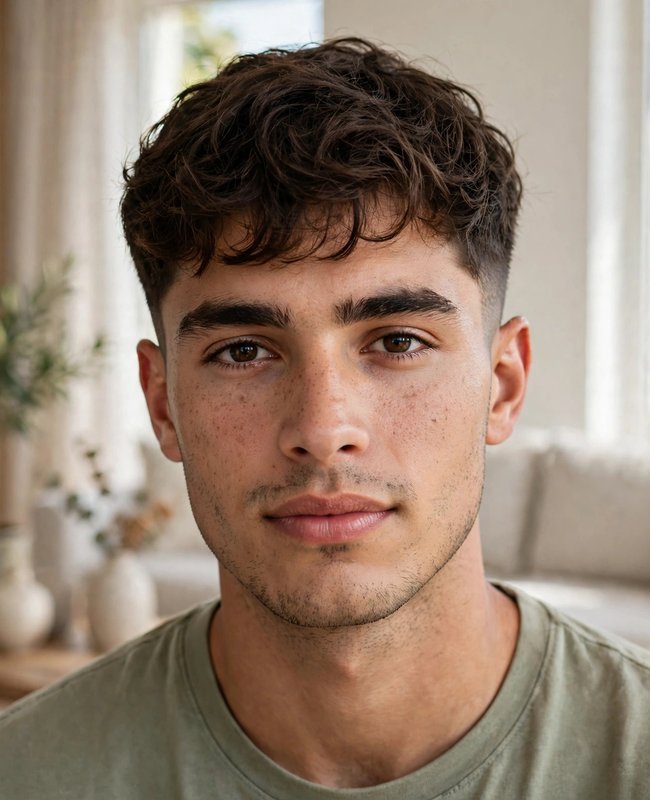
The top keeps its natural waves. The barber cuts the fringe with the wave in mind, so it doesn’t split unevenly. Tight, clean sides keep the cut controlled. The result looks relaxed and easy for everyday wear.
Will a French Crop Low Taper Fade Suit You?
It suits many men because so much of it is adjustable. Fringe length, top height, side weight, and texture can all change. That said, no cut is guaranteed to work for everyone. Hair type, density, and growth patterns still matter.
Suitability by Hair Type and Density
Straight hair gives the crispest fringe. Fine hair works too, but over-thinning can expose the scalp, so keep some weight on top. Wavy hair adds natural movement. Thick hair benefits from bulk removal inside the top.
Curly and coily hair need extra length because of shrinkage. A curl cream or a light defining product keeps the texture controlled. Ask the barber to leave the top longer than you want it to look when dry.
Face Shape, Forehead and Hairline Considerations
A forward fringe can soften a high forehead. A receding hairline may look fuller with a textured fringe that sits across it. Round faces usually look better with moderate top height. Longer faces often suit a fuller fringe that breaks up the vertical line.
Temple contrast also matters. A high fade can emphasize a receding temple. A softer taper may look more natural.
Cowlicks, Crown Thinning and Sensitive Skin
A cowlick at the front can push the fringe up or sideways. Ask the barber to leave that area longer, since a very short cut will fight the growth pattern. If your crown is thinning, avoid cutting the top extremely short. A slightly longer top gives a fuller look.
Sensitive skin can react to close shaves, especially at the neckline. If you get bumps or irritation, ask for a longer transition or a shadow taper. For persistent irritation, a dermatologist is the right person to ask.
What French Crop Taper Fade Works Best for Your Hair Type?
The right version depends on how your hair behaves. Fringe shape, top length, and fade height all shift with texture.
Straight Hair
Go for a blunt fringe and smooth sides. A low or mid taper keeps the look crisp. Add texture with matte clay or light powder so the top doesn’t sit flat.
Thick Hair
Heavy hair benefits from bulk removal and a layered, textured top. This keeps the fringe from turning into a helmet. A matte finish keeps the silhouette light.
Thin / Light Hair
Fine hair looks fuller with point cutting and some weight left on top. Use lightweight products, such as matte paste, that separate strands without weighing them down. A softer fringe usually looks more natural than a heavy blunt one.
Wavy / Frizzy Hair
Let the waves show. A relaxed top with a soft fringe works well. Sea salt spray adds texture, and a small amount of cream controls frizz.
Curly Hair
Leave extra length so the fringe can follow the curl. Keep the sides tidy and the taper clean. A curl cream defines the pattern and keeps the top controlled.
What Face Shapes Look Best With a French Crop Taper Fade
Face shape guides fringe length and top height. It isn’t a strict rule. Small changes to the fringe, volume, and side weight shift the balance.
Round Face
Keep the top moderate in height. Avoid piling volume up. A mid taper adds structure, and a soft fringe with light texture helps the face look less wide.
Oval Face
An oval face works with almost any variation. Classic, messy, and textured versions all look balanced. Low, mid, and high tapers are all fair game.
Square / Rectangle Face
Strong angles suit a sharp, structured fringe and a clean taper. A high taper or an angular fringe adds bold definition along the jawline.
Long Face
Avoid extra height on top. A forward fringe creates a horizontal break across the forehead and shortens the face visually. A low taper keeps the sides from looking too stripped.
Heart Face
A heart-shaped face often works well with a softer fringe that balances a wider forehead against a narrower chin. Straight to slightly wavy hair gives the most flexibility, and a mid or low taper keeps the proportions even.
What to Tell Your Barber / How to Ask a Barber for a French Crop Taper Fade
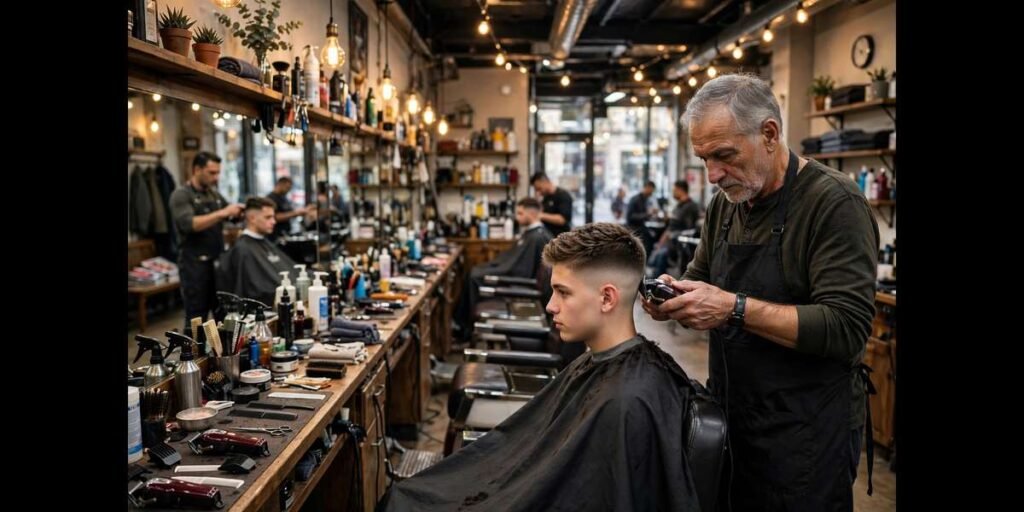
Describe four things: top length, fringe type, fade height, and finish. A French crop taper fade name alone doesn’t cover those details.
A simple order might sound like this:
- Top: about an inch or two, textured, brushed forward
- Fringe: blunt and straight, or soft and choppy
- Sides: low taper, blending at the temples and neckline
- Finish: natural neckline, or a sharp line-up
Mention your hair type and how much time you want to spend styling. Ask the barber to point cut the top if you want movement. Say if you want to avoid a hard line at the front. Ask about clipper guard lengths only if you want specifics, since the right numbers vary.
How to Use Reference Photos
Bring one to three photos. Ideally, include a front view, a side view, and a back view. Choose images of men with similar hair type and density, since the same cut looks different on straight and curly hair.
Point out what you like: the fringe shape, the fade height, or the top texture. Then add a few words. A photo plus a clear description removes most of the guesswork.
How Long Should the Top Be for a French Crop?
Most French crops keep the top around one to two inches. That’s short to medium, long enough to push forward but short enough to stay neat.
Straight hair can sit toward the shorter end. Curly hair needs more length because of shrinkage. If you want visible texture, leave a bit more. The top should be long enough to style forward with the fringe falling cleanly.
How To Wear a French Crop Taper Fade / How to Style a French Crop Taper Fade
Styling takes only a few minutes. A short routine usually looks best.
- Start with towel-dried or slightly damp hair.
- Blow-dry the top forward. Use a lightweight dryer on a medium setting.
- Rub a small amount of product between your fingers.
- Work it through the top and shape the fringe forward.
- Press the fringe down lightly. Break it up with your fingers for a messier look.
Push the airflow forward as you dry so the fringe sits in the right direction. A round brush helps with extra shape. Go light on product. You can always add more.
Styling Products and Care Tips / Which Product Type Should You Use?
Pick the product by finish. Most French crops look best matte, with flexible hold.
| Product | What it does | Best for |
|---|---|---|
| Matte clay | Adds grip and texture without shine | Most hair types |
| Molding paste | Gives flexible hold and definition | Thick or messy styles |
| Texture powder | Adds volume and separation | Fine or straight hair |
| Sea salt spray | Adds grit and movement | Wavy or straight hair |
| Curl cream | Defines curls and controls frizz | Curly or frizzy hair |
| Light mousse | Adds volume with little weight | Fine hair, side parts |
A heat protectant helps if you blow-dry often. Shiny pomades and heavy gels tend to flatten the texture, so use them sparingly.
Maintenance, Grow-Out and How Often to Trim
Daily styling is easy, but the taper needs regular upkeep. Many barbers suggest a trim every two to four weeks. Skin fades and high tapers often need visits on the shorter end. Low tapers usually hold their shape longer.
As the cut grows out, the sides lose sharpness first. The neckline gets fuzzy, and the blend looks softer. The fringe may fall into your eyes. A low taper tends to grow out more gently than a skin fade, since the contrast starts lower.
Exact timing varies with hair growth rate, fade height, and personal standards. A quick refresh of the sides and neckline often keeps the shape neat.
Keeping It Sharp Between Visits
Between trims, a few small habits help. Keep the neckline clean. Use a matte product so the natural texture stays visible. Avoid washing too often, since it can leave hair flat and hard to style.
Leave the fringe to the barber. Cutting it yourself often leaves it too short or uneven. If you trim anything at home, stick to a small clean-up of the neckline.
Is the French Crop Taper Fade a Good Haircut for Kids?
Yes, usually. It’s easy to comb, looks clean, and works for younger boys and teens. A soft low taper is a good fit because it’s not too severe.
For school, check the dress code or grooming rules before choosing a fade height or a skin-close finish. Ask the child what they like too. Their comfort matters as much as the look.
French Crop Taper Fade and Textured Crop Haircut
The French crop focuses on the fringe. It’s combed forward and often cut blunt. A textured crop focuses on movement on top, with a choppier, softer, and messier fringe.
A textured French crop taper fade sits between them. You get a clear fringe with some movement. It’s a good compromise if a blunt fringe feels too stiff.
French Crop with Skin Fade
This version shaves the sides close to the skin and leaves a short, natural top. The contrast is bold. It looks modern and works for both formal and casual settings. It also highlights jawline features. Matte pomade or clay gives hold without shine.
French Crop with Hard Part
A hard part is a shaved line that separates the top from the sides. It adds a deliberate, refined touch and gives the cut depth and structure. It works for formal or semi-casual settings, and it suits rectangular faces and thick, straight hair. The line needs regular upkeep, so plan on frequent barber visits.
French Crop with Angular Fringe
The fringe is cut in strong, square lines across the forehead. The look is bold and geometric, so it needs good symmetry. It suits square and rectangular faces. Texture paste or styling wax gives the shape hold. Avoid cutting it too short or over-layering it.
Asymmetrical French Crop
The fringe and top vary in length from one side to the other. This adds a creative twist while the structure stays intact. The direction of the fringe matters most. Regular trims keep the imbalance deliberate instead of accidental.
French Crop Undercut
An undercut shaves the underside very short and leaves a longer textured top. The contrast is dramatic. On a French crop, the top stays moderate in length. This version suits rectangular and lean oval faces. Keep the lines from looking harsh by blending the transition.
Low-Maintenance French Crop
The simplest version uses a short top, a low taper, and a light matte paste. Styling takes a quick brush-through. It fits busy mornings and low-key professional settings. The cut grows out evenly, which lets you stretch the time between visits.
French Crop with Side Part
A side part adds classic lines to a modern shape. The fringe sweeps slightly to one side. It works well in business and social settings, and it suits round and square faces on straight hair. A light mousse adds volume. Frequent trims keep the part defined.
French Crop vs Crew Cut
Both cuts are short and low effort. The practical difference is the front. A French crop pushes the fringe forward. A crew cut keeps the top slightly longer and brushes it up, without a forward fringe.
Choose by how you live. For office work, a French crop’s fringe looks polished. For sports or trades, a crew cut can feel more practical. Hair type and hairline matter too. A fringe hides a receding hairline better than a brushed-up top.
Common Mistakes to Avoid

Most problems come from poor communication or the wrong match for your hair. These five mistakes show up most often.
Overloading the Fringe
A fringe that’s too heavy or too thick turns into helmet hair. Ask for texture and balance, and keep the top from sitting flat.
Too Much Fade
A high taper isn’t for everyone. If you’re unsure, start low and go higher later. Consider your face shape and the contrast you want.
Product Overuse
Too much wax or gel destroys natural texture. Use a tiny amount of matte product and add more only if needed. A shiny, rigid finish looks stiff.
No Photo Available
The same haircut name can mean different things to different barbers. A front and side photo makes the exact look clear. Pair it with a few words.
Not Considering Your Hair Type
A cut that works on straight hair may fail on curly or thin hair. Account for texture, density, and growth patterns. Ask the barber to adjust the fringe shape and fade height.
Final Thoughts: Is the French Crop Taper Fade Useful for You?
The French crop taper fade is a clean, easy-to-manage haircut that adapts to many hair types. You can keep it soft with a low taper or sharpen it with a high one. The top can stay neat or turn messy.
Start with a clear picture of what you want. Bring a reference photo, describe the fringe and fade height, and keep some texture on top. That combination does most of the work.
FAQs
What is a French Crop Taper Fade?
It’s a men’s haircut with a short textured top, a forward fringe, and sides that blend gradually shorter. It looks clean, needs little styling, and works across several hair types.
Is a French Crop Taper Fade suitable for straight hair?
Yes. Straight hair holds a crisp fringe and smooth sides well. The top needs some texture so it doesn’t look flat. A matte clay or powder helps.
Is a French Crop Taper Fade suitable for curly hair?
Yes, with enough length on top. Curls give the crop natural texture, and the tidy sides keep it controlled. Ask the barber to leave extra length for shrinkage.
What is the difference between a taper fade and a French crop?
A French crop is the top: short, textured, and forward. A taper fade is the side technique that blends the sides and back. Most men combine them.
How do I ask my barber for a French Crop Taper Fade?
Describe the top length, fringe type, fade height, and finish. Bring a reference photo. Clear wording plus a picture gets the closest result.
Is a French Crop Taper Fade low maintenance?
Styling is quick, often under a minute with little product. The taper needs regular trims to stay sharp. Low tapers need less frequent visits than high ones.
Low taper or mid taper: which is better?
Neither wins outright. A low taper gives a subtle, clean look and suits a first crop. A mid taper adds more contrast and a tighter finish. Pick based on your face shape, style, and upkeep.
Is a French Crop Taper Fade good for kids?
Usually yes. It’s easy to comb and looks neat. A soft low taper is a gentle choice. Check school grooming rules first.

Andrew Ethan is a men’s grooming writer with experience covering haircuts, hairstyles, hair trends, and hair care. He researches popular men’s styles, including fades, tapers, curls, mullets, and classic cuts. Andrew shares practical styling tips and easy-to-follow advice to help readers choose modern hairstyles that suit their look and lifestyle.