
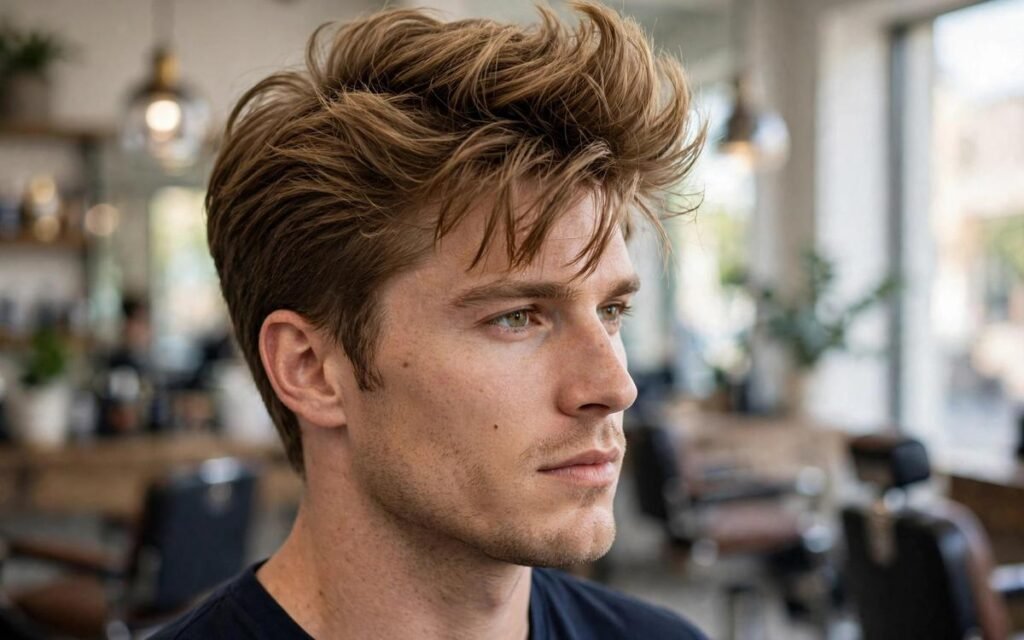
A blowout taper textured fringe is a men’s haircut with three parts: tapered sides, a blow-dried crown, and a point-cut fringe that falls forward. The sides stay clean without going to skin. The top gets lifted volume. The front breaks into soft, piecey sections.
This guide explains what the cut is and how it differs from a fade or a crop. You’ll also learn how to pick a taper height, what to tell your barber, how to style it at home, and how often to trim it. Face shape, hair type, and work settings are covered too.
What Is a Blowout Taper With Textured Fringe?
It’s a modern men’s haircut built from three separate pieces: a clean taper on the sides and back, a lifted crown shaped with a blow dryer, and a fringe cut with scissors to look broken rather than blunt. Each piece does a different job. Together they give you a tall, airy top with a matte finish and neat edges.
The taper can sit low, mid, or high. That choice changes the whole personality of the cut. A barber typically wants you back every two to four weeks to keep it sharp.
What Is a Blowout Taper?
A blowout taper is a short taper around the ears, sideburns, and nape, paired with a top long enough to blow dry up and back. Most versions leave roughly 3 to 4 inches on top. That length is what lets the dryer create height off the forehead and a slight flare at the front corners.
The taper keeps a shadow of hair. It isn’t a skin fade, and it isn’t a pompadour. The finish is matte and airy, with a separated top and full sides.
The Taper: Clean, Gradually Shortened Sides
A taper shortens the hair gradually from the sides down to the neckline. It never reaches skin. Think of a narrow band of short clipper length around the ear and nape, with about an inch of side length left above it.
The result is a smooth, natural graduation. The edges look clean. The sides need less upkeep than a fade because the blend is gentle. The taper usually stops above the ear and follows the natural hairline.
The Blow-Dried Crown: Lifted Volume and Shape
The crown is where the volume lives. You dry it with a blow dryer and a round brush, with the nozzle pointed up at the roots. Then you push the hair up and back.
Crown length matters more than most people expect. With 3 to 4 inches on top, the hair has enough weight to lift and enough length to hold a tall shape. A cool shot at the end helps the hair set as it cools. Plan on a short daily blow-dry.
The Textured Fringe: Point-Cut, Piecey Front Layers
The fringe is the front section that falls forward over the forehead. A barber point cuts it by angling the scissors upward into the ends. That creates irregular endpoints instead of one straight line.
The ends look feathered and separated. They move naturally. Most fringes land somewhere between eyebrow length and mid-forehead.
Taper vs. Fade: What’s the Difference?
A taper shortens hair gradually and keeps some length at the shortest point. A fade shortens hair down to skin or near skin, so the contrast is stronger. Barbers treat them as two named techniques, so ask for the one you actually want.
The taper is the lower-maintenance, more versatile option. The fade is the sharper, bolder one. Both can include sideburns and a neckline blend.
How a Taper Creates a Softer Transition
A taper leaves length above the blend line, so you never see a harsh edge. The shortest point keeps a shadow. The narrow band at the ear and the neckline blends smoothly into the sides.
Contrast stays subtle. The look is clean and safe. It also grows out cleanly because there’s no bare skin to turn fuzzy. Side fullness stays intact, which keeps the silhouette smooth.
How a Fade Creates More Contrast
A fade drops to skin or close to zero length. That creates a defined line and makes the scalp visible. The higher the fade climbs toward the temple, the bolder and more dramatic the transition looks.
You get crisp edges and a stronger silhouette. The trade-off is more frequent upkeep, because a skin finish softens quickly. For a blowout with a tall top, a high fade also removes the side weight that supports the shape.
Textured Fringe vs. Textured Crop: What’s the Difference?
A textured fringe uses a longer top that is blow-dried for height, with piecey front layers. A textured crop uses a shorter, flatter top with a blunter fringe sitting close to the brow. Both look textured. The difference shows up in the front view and the profile.
Fringe Length and Shape
A blowout fringe typically lands at the eyebrow or mid-forehead. The ends are point cut, so the shape looks broken. A crop fringe sits higher on the forehead, often as a short, blunt line.
A longer fringe covers more forehead and moves more. A shorter one keeps the face open. That choice also changes how balanced your face looks, which the face shape section covers below.
Crown Volume and Side Profile
From the side, a blowout shows real height above the forehead. The crown looks lifted and rounded. The sides stay full below it, so volume contrast is visible.
A textured crop usually has a flatter top and less visible height. Same matte texture, different profile.
Low, Mid, or High: Which Taper Height Should You Choose?
The taper height decides how much side length stays and how strong the contrast looks. A low taper stays near the ears and neckline. A mid taper starts around the middle of the head. A high taper climbs above the temple.
Higher tapers mean more contrast and more frequent barber visits. They also mean less side fullness. Your face shape and hair type should shape the choice.
| Taper height | Contrast | Side fullness | Barber visits |
| Low | Subtle | Highest | Least often |
| Mid | Moderate | Slimmer | Moderate |
| High | Strongest | Lowest | Most often |
Low Blowout Taper Textured Fringe
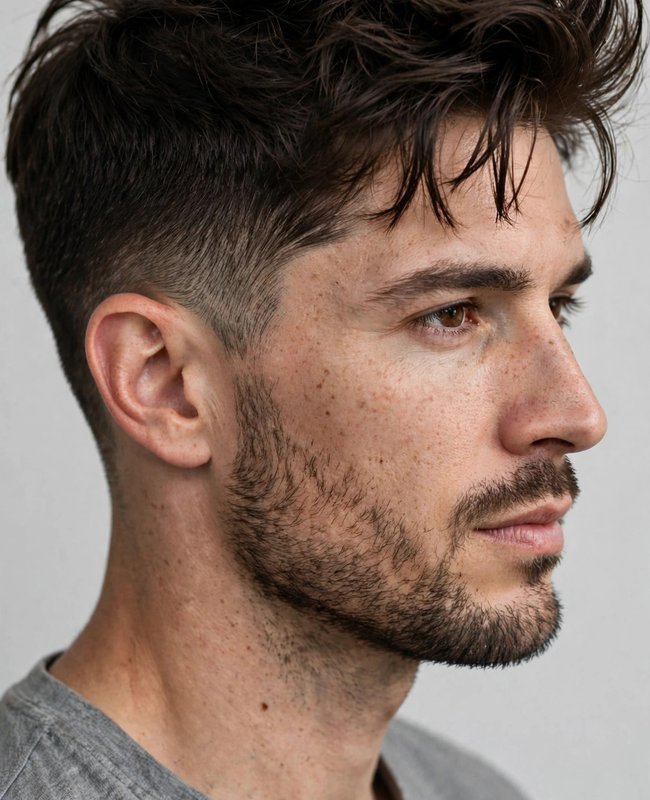
The low version puts the taper line at the ears and neckline. Most of the length stays on top, and the sides stay full. The narrow band at the sides keeps a shadow, so the blend is soft and the nape has no hard line.
It suits most face shapes and most hair types. It also has the slowest grow-out and the lowest upkeep. It’s the clean, safe version.
Mid Blowout Taper Textured Fringe
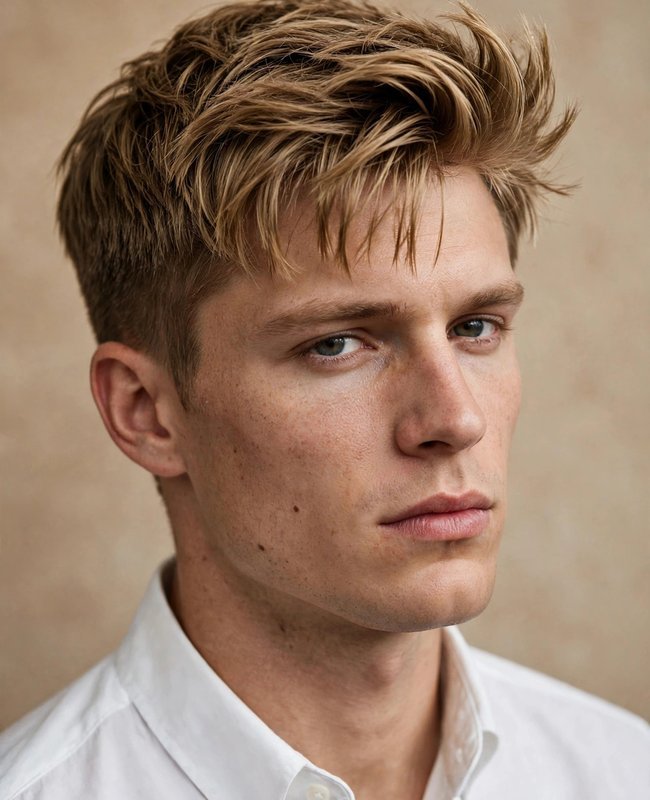
The mid taper starts around the middle of the head, just above the ears. You see more contrast and a sharper transition. It sits between subtle and bold.
The fringe stays full, and the crown keeps enough length to blow out. The sides look slimmer. That helps round faces. Upkeep is moderate, which makes this a good everyday version.
High Blowout Taper Textured Fringe
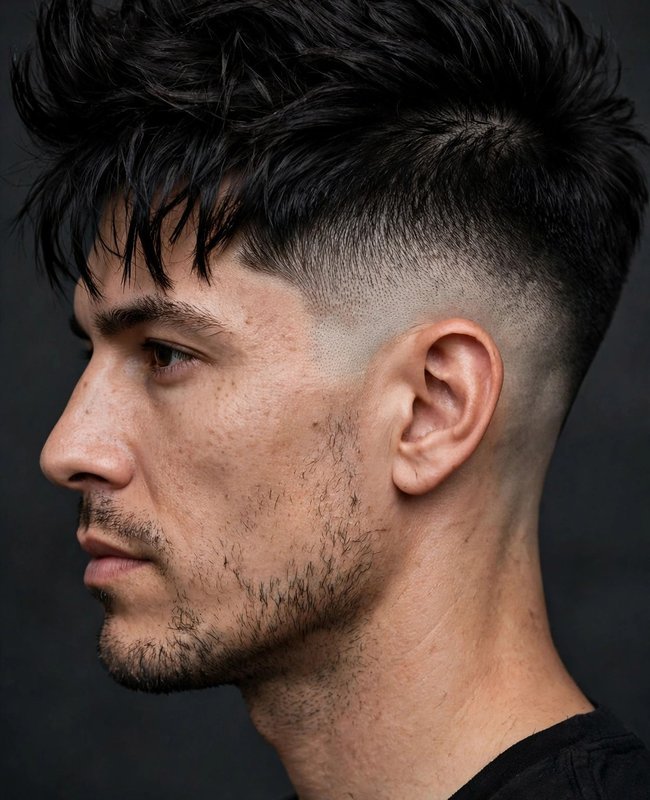
The high taper starts above the temple. It delivers the sharpest contrast and the boldest look. You also get more scalp visibility and less side fullness.
This version carries risk. The crown needs enough length, or the shape turns flat and boxy. A mushroom shape can appear when the top sits on nothing. Choose the height carefully, because a high taper starts to look like a different haircut altogether.
What Face Shape Is Good for a Blowout Taper?
Most face shapes can wear this cut. You adjust crown height, fringe coverage, and side width to balance your proportions. Treat these as starting points. A barber’s assessment of your forehead width, jaw angle, and cheekbone width beats any rule.
Oval Face Shape
Oval faces have balanced proportions, so any taper height works. A mid-forehead or eyebrow-length fringe fits well. No correction is needed.
Round Face Shape
Round faces benefit from height on top and slimmer sides. A mid taper with extra crown height makes the face look longer. Keep the front-corner flare small. A fringe at eyebrow level adds a horizontal element, so keep it at or below that line.
Long or Oblong Face Shape
Long faces need less vertical height. Go with a low taper, a forward fringe, and a shorter top of about 2.5 to 3 inches. The fringe adds width and shortens the face. Avoid tall versions, and keep the sides fuller.
Square Face Shape
A strong jaw and angular features pair well with a low taper. The fringe softens the angles. A side-swept option works too. Skip very high fades, because they sharpen the structure further.
Diamond Face Shape
Diamond faces have a narrower forehead and wider cheekbones. A fringe adds forehead width and balances the proportions. Use a low or mid taper. Keep crown height under control so the cheekbones don’t dominate.
How Do You Ask Your Barber for a Textured Fringe?
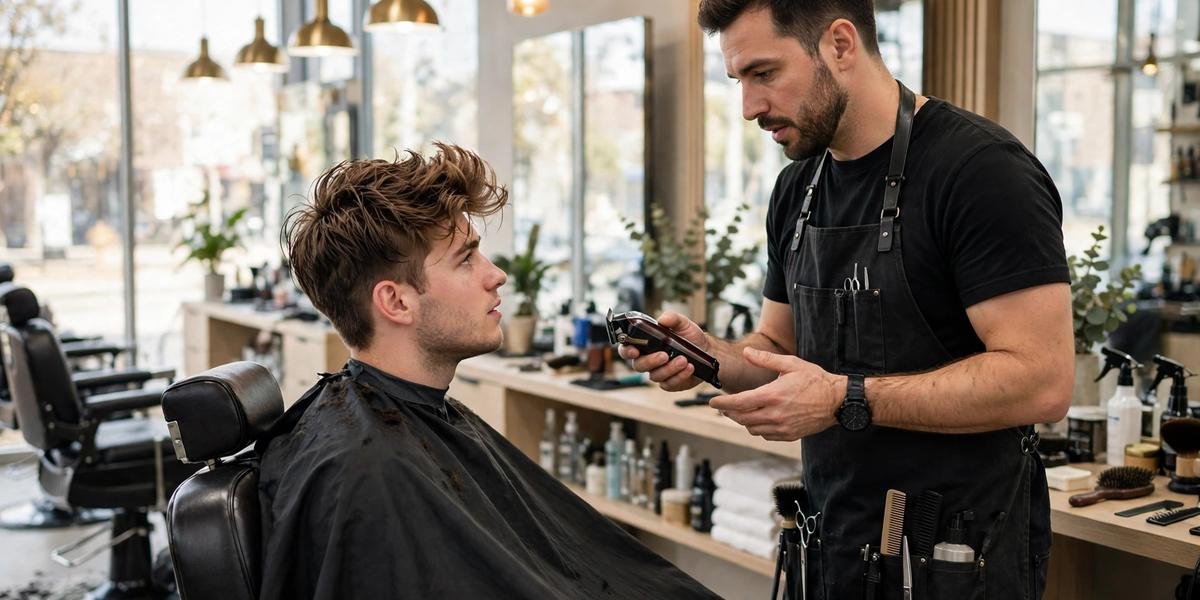
Name the technique, say the lengths, and bring photos. A clear request covers taper height, crown length in inches, and how the fringe should be cut. Two reference photos, one from the front and one from the side, work better than words alone.
What to Tell Your Barber: Taper Height, Crown Length, and Fringe
Say it in order. Start with the taper height and where it should stop. Add the top length in inches. Then describe the fringe.
A complete request sounds like this: “Low taper with a soft nape and no hard line. Leave 3 to 4 inches on top. Point-cut the front into a piecey fringe that sits at my eyebrows.” Show your photos after that.
How to Ask for Proper Point Cutting
Ask for point cutting by name. Tell your barber to cut upward into the ends with the scissors angled, not straight across. You want soft, separated ends and natural movement.
Don’t assume the barber’s default technique will do it. A straight cut leaves a blunt line. Specifying the technique gets you the piecey result.
How to Check Whether Your Point Cutting Is Done Right
Check in the chair, before the blow-dry. Watch the scissors. They should move at an angle into the ends in short, upward snips. A single straight cut in one motion is a warning sign.
Then look at the fringe itself. You should see uneven strands and no flat line. If it looks blunt, ask for an angled follow-up before you leave.
Does a Blowout Taper Textured Fringe Work for Your Hair Type?
Yes, for every type. Texture changes the cutting approach and the styling approach. Density affects volume. Curl pattern and shrinkage affect how long the top should be.
Straight Hair

Straight hair holds the cut precisely but has no natural texture. The point cutting adds it. Without a dryer, the fringe falls flat. Expect to blow dry daily with the nozzle pointed up at the roots and finish with a matte clay for hold.
Wavy Hair

Wavy hair is the most compatible texture. The natural bend gives the fringe movement, and the waves hold the crown shape. Styling effort stays low. A rough blow-dry with your fingers is often enough, and sea salt spray on damp hair adds separation.
Curly Hair

Curly hair works when the cut preserves the curl pattern. The barber removes bulk at the fringe and leaves a tall, rounded top, often 4 to 5 inches. Cut it dry so the curls show their true length.
Use curl cream and a diffuser on low heat. Skip the round brush. Don’t touch curls while they dry, or frizz will appear.
Fine or Thin Hair

Fine hair has lower density, so crown lift is the hardest part. A shorter top of about 3 inches helps. Use a volumizing product at the roots and finish with texture powder. Avoid heavy paste, because it collapses the crown.
Keep the taper low so the sides don’t look sparse. Skip the front flare if the temples are thinning.
Thick Hair
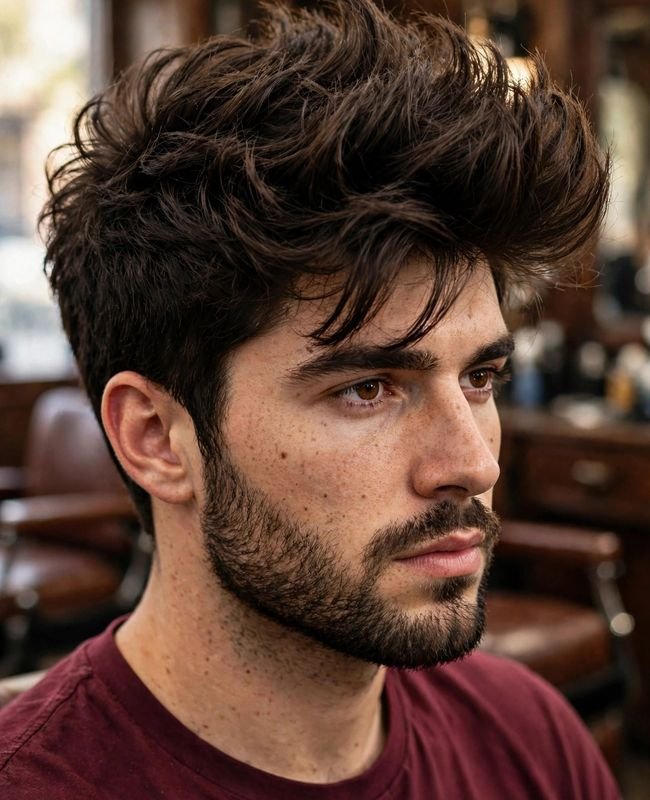
Thick hair holds height well but gets heavy. Ask for internal layering to remove weight and control the temple puff. Lift at the roots with the nozzle up, then lock the shape with matte clay. Dry it every day, or the hair falls flat by noon.
Coily Hair
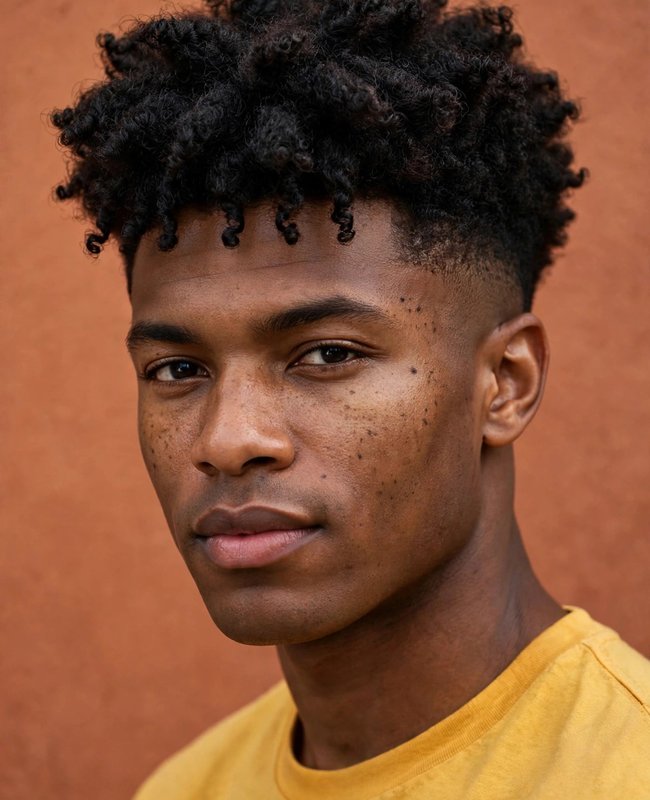
Coily hair gives you natural volume and a rounded shape. A low taper with a full top works well. Blow out the top with a dryer comb attachment, then pick it gently for height. Plan for shrinkage when you choose the length. Tight coils look much shorter than they measure.
How to Style a Blowout Taper Textured Fringe at Home
Plan on 5 to 10 minutes. Towel dry first. Dry the crown up and back, push the fringe forward and slightly to one side, then separate the pieces with your fingertips and finish with a matte product. A cool shot sets the shape.
Morning Styling Routine for Straight Hair
1. Towel dry until the hair is about 70% dry.
2. Spray volumizing or thickening spray at the damp roots.
3. Blow dry the crown upward with a round brush for lift.
4. Dry the fringe forward, running the nozzle down the shaft.
5. Finish with texture powder or a pea-sized amount of matte clay. Separate with your fingers.
Once you’ve practiced, this takes 2 to 3 minutes of actual drying.
Morning Styling Routine for Curly Hair
1. Work curl cream through damp hair, with extra attention on the fringe.
2. Diffuse on low heat, scrunching upward for crown volume.
3. Diffuse the fringe forward. Don’t touch wet curls.
4. Once fully dry, separate the curls at the fingertips for definition.
Air drying is an option when you have time. It’s gentler and still keeps curls defined.
How to Create Crown Volume and Separate the Fringe
Point the nozzle at the roots and blow the crown up and back. Dry the front few inches forward, slightly to one side. Use the round brush for lift at the front corners if you want the flare.
For separation, rub a pea-sized amount of matte paste between your palms. Apply it back to front. Pinch the fringe into pieces. Hit it with the cool shot to lock the height.
Which Products Ruin This Haircut?
Heavy pomade, heavy wax, and gel top the list. They pull the top flat and add shine. The fringe turns into a flat curtain or a rigid block, and the look drifts toward a pompadour.
Hairspray as your main hold leaves a crunchy, stiff finish. Put product on wet hair and it dilutes. Better choices include matte clay, texture powder, matte paste, and sea salt spray. Apply them at about 70% dry, and finish with a light seal.
How Often Should You Get a Blowout Taper Textured Fringe Trimmed?
Most men book a trim every 2 to 4 weeks. The taper needs the most attention. The fringe depends on its length. Hair typically grows about half an inch per month, so growth shows up fast on a short taper.
A common rhythm looks like this: a taper cleanup every 2 to 3 weeks, a full cut every 3 to 4 weeks, and a top trim every 5 to 6 weeks. Treat it as a starting point. Your growth rate and tolerance for softness decide the final schedule.
When to Clean Up the Taper
The taper stays sharp for about two weeks. After that, the neckline, sideburns, and ear line start to soften. A cleanup every 2 to 3 weeks refreshes those edges between full cuts.
It’s a short appointment. Let the blend soften a bit longer if you prefer a looser look.
How Fringe Length Affects Trim Frequency
A mid-forehead fringe has a wider window, often around three weeks. An eyebrow-length fringe starts falling into your eyes sooner, sometimes in 10 to 14 days. A longer starting length means fewer fringe-only trims.
Forward-falling growth makes the change obvious. Pick a length you can live with.
When to Get a Full Haircut
Book a full haircut when the shape is gone. Signs include heavy ends, a lost crown, and a fringe that has crept past its position. A full cut resets the taper and the top together, and it restores crown length.
Don’t skip it for too long. The cut loses balance, and a complete reshape takes more length off.
What Mistakes Ruin a Blowout Taper Textured Fringe?

Most failures come from the height decision, the crown length, the cutting technique, or the styling. They’re easy to avoid once you know them.
Choosing a Taper That’s Too High
A taper that climbs past the temple removes side bulk. The cut reads as a fade. The long hair on top loses its support and sits on nothing. You also lose the flare.
Fixing it takes 4 to 6 weeks of growth, because you can’t add hair back in one visit. Start low. You can always go higher next time.
Cutting the Crown Too Short
Under 3 inches, the dryer has nothing to lift. You get no height and no movement. The result is flat, sometimes boxy or mushroom shaped. This is the single most common cause of a failed blowout.
Say the length in inches when you ask for the cut.
Skipping Point Cutting
A straight-across cut gives you a blunt fringe. Texturizing afterward doesn’t fix it, because the ends are still not broken. You see one hard line, no separation, and a solid mass that can look like a helmet.
Ask for point cutting by name, and check the technique in the chair.
Creating a Hard Line at the Nape
A blocked neckline looks sharp for a day. Then it turns fuzzy within a week. A soft nape, tapered into the neckline, grows out cleanly. Ask for a gradual blend at the back of the neck.
Using Heavy or Shiny Styling Products
Heavy products flatten the top and add shine you don’t want. Swap them for matte clay, matte paste, texture powder, or sea salt spray. Use a pea-sized amount.
Styling Hair While It’s Too Wet
Wet hair dilutes product and weakens the hold. The shape won’t set, and the fringe falls flat. Towel dry first. Apply product when the hair is damp, not wet, at around 70 to 80% dry.
Ignoring Side Weight and Hair Distribution
Heavy sides make the silhouette unbalanced even when the taper line is clean. Temple puff is the usual sign. Ask the barber to check weight placement and use internal layering where needed. The top-to-side proportion should look balanced from the profile.
Using Too Much Heat
High heat every day dries the hair out and can cause heat damage. Use medium heat. Finish with a cool shot. On curly hair, use low-heat diffusing. Fewer blow-dry days also help.
Is a Blowout Taper Textured Fringe Suitable for Work and Formal Settings?
Yes. The taper height, fringe length, and product finish set the formality level. Lower and shorter reads more conservative. Higher and looser reads more casual.
Low Taper for Conservative and Professional Settings
A low taper with a mid-forehead fringe is the safest option for traditional corporate offices. Contrast stays subtle. The cut looks neat and polished with a matte clay finish. It’s dress-code safe and low maintenance.
Mid Taper for Business-Casual Settings
A mid taper fits smart-casual offices. It’s defined but soft. Keep the fringe neat at mid-forehead length and the volume controlled. Matte clay gives a clean finish.
High Taper for Casual and Creative Settings
A high taper suits relaxed dress codes and creative industries. A longer, messier fringe and a sea salt spray finish add a modern edge. It’s a statement style. Check your workplace norms first.
Frequently Asked Questions
Does a Blowout Taper Textured Fringe Work for Fine Hair?
Yes, with adjustments. Keep the top around 3 inches and use a volumizing product at the roots. Finish with texture powder or volume powder. Avoid heavy paste, because it makes the crown collapse. Sea salt spray adds grip without weight.
How Long Does It Take to Style a Blowout Taper Textured Fringe?
Most routines take 5 to 10 minutes. You blow dry the crown up, dry the fringe forward, and finish with a lightweight matte product and your fingertips. Time varies by hair type. It gets faster once you’ve learned the sequence.
Why Does My Textured Fringe Go Flat?
Usually the cause is too much product, the wrong product type, or styling on hair that’s too wet. Heavy paste weighs the fringe down. Switch to a lighter matte clay or texture powder. Apply it at about 70% dry, and use less.
Can You Get a Blowout Taper Textured Fringe With Curly Hair?
Yes. Ask the barber to preserve your curl pattern and remove bulk at the fringe. Use curl cream and a diffuser instead of a round brush. Low heat and a tall, rounded top work well. Cut it dry, so the barber sees how the curls sit.
How Long Does a Blowout Taper Last?
The blow-dried shape lasts until you wash or sleep on it. You’ll re-blow it daily. The taper stays sharp for about two weeks. Plan on a cleanup every 2 to 3 weeks, a full cut every 3 to 4 weeks, and a top trim every 5 to 6 weeks.
How Do You Style a Blowout Taper With a Textured Fringe?
Blow the crown up and back. Dry the front forward, slightly to one side. Apply a pea-sized amount of matte paste, then pinch the front into pieces. Keep the front few inches at the same height as the crown. Finish with your fingers.

Andrew Ethan is a men’s grooming writer with experience covering haircuts, hairstyles, hair trends, and hair care. He researches popular men’s styles, including fades, tapers, curls, mullets, and classic cuts. Andrew shares practical styling tips and easy-to-follow advice to help readers choose modern hairstyles that suit their look and lifestyle.